AI Face Jupiter Essl

AI Face Jupiter Essl — independent reviews, comparisons, pricing and step-by-step guides on Aizhi.

  • Ericom Connect

    Ericom Connect

    Ericom Connect is a remote access/application publishing solution produced by Ericom Software that provides secure, centrally managed access to physical or hosted desktops and applications running on Microsoft Windows and Linux systems. == Product overview == Ericom Connect is desktop virtualization and application virtualization software that allows users to run applications remotely, without installing them on the local computer or device. The software is noted for its scalability, ease of deployment, and compatibility with any type of infrastructure, cloud or physical. Ericom Connect uses AccessPad (native client for desktops), AccessToGo (native client for mobile), or AccessNow, one of the first HTML5 RDP solutions to support clientless access to Windows desktops and applications from any device with an HTML5-compatible browser, including Macintosh computers, mobile devices, and Google Chromebooks. Other notable features include performance monitoring, built-in real-time analytics & BI, support for two-factor authentication (using RSA SecurID), multi-tenancy and multi-datacenter support via a single unified web interface, and a “Launch Simulation” feature that allows users to visualize and simulate actual step-by-step user processes directly from within the administration console. In addition to scalability, by distributing configurations, logs, etc., across multiple servers there is no single point of failure, as can be the case if all configuration information is stored on one server. == History == Ericom Connect was introduced in 2015. Ericom Connect is a successor to Ericom PowerTerm Web Connect. PowerTerm Web Connect used an architecture similar to what was then current with Citrix and VMWare, relying on a centralized SQL server, a connection broker, image management for different hypervisors, and a variety of clients. Ericom Connect uses a new grid architecture that provides more scalability, reliability, and flexibility than before.

    Read more →
  • Torment: Tides of Numenera

    Torment: Tides of Numenera

    Torment: Tides of Numenera is a 2017 role-playing video game developed by inXile Entertainment and published by Techland Publishing for Microsoft Windows, macOS, Linux, PlayStation 4 and Xbox One. It is a spiritual successor to 1999's Planescape: Torment. The game takes place in The Ninth World, a science fantasy campaign setting written by Monte Cook for his tabletop RPG Numenera. Torment: Tides of Numenera, like its predecessor, is primarily story-driven while placing greater emphasis on interaction with the world and characters, with combat and item accumulation taking a secondary role. The game was crowd-funded through Kickstarter in March 2013. At the campaign's conclusion, Torment: Tides of Numenera had set the record for highest-funded video game on Kickstarter with over US$4 million pledged. The release date was initially set for December 2014, but was pushed back to February 2017. == Gameplay == Torment: Tides of Numenera uses the Unity engine to display the pre-rendered 2.5D isometric perspective environments. The tabletop ruleset of Monte Cook's Numenera has been adapted to serve as the game's rule mechanic, and its Ninth World setting is where the events of Torment: Tides of Numenera take place. The player experiences the game from the point of view of the Last Castoff, a human host that was once inhabited by a powerful being, but was suddenly abandoned without memory of prior events. As with its spiritual predecessor, Planescape: Torment, the gameplay of Torment: Tides of Numenera places a large emphasis on storytelling, which unfolds through a "rich, personal narrative", and complex character interaction through the familiar dialog tree system. The player is able to select the gender of the protagonist, who will otherwise start the game as a "blank slate", and may develop his or her skills and personality from their interactions with the world. The Numenera setting provides three base character classes: Glaive (warrior), Nano (wizard) and Jack (rogue). These classes can be further customized with a number of descriptors (such as "Tough" or "Mystical") and foci, which allow the character to excel in a certain role or combat style. Instead of a classic alignment system acting as a character's ethical and moral compass, Torment: Tides of Numenera uses "Tides" to represent the reactions a person inspires in their peers. Each Tide has a specific color and embodies a number of nuanced concepts that are associated with it. The composition of Tides a character has manipulated the most determines their Legacy, which roughly describes the way they have taken in life. Different Legacies may affect what bonuses and powers certain weapons and relics provide, as well as give a character special abilities and enhance certain skills. == Synopsis == === Setting === Tides of Numenera has a science fantasy setting. In the far future (one billion years), the rise and fall of countless civilizations have left Earth in a roughly medieval state, with most of humanity living in simple settlements, surrounded by technological relics of the mysterious past. The current age is called the "Ninth World" by its scholars, who believe that eight great ages existed and were destroyed, disappeared or left the Earth for unknown reasons before the present day, leaving ruins and various oddities and artifacts behind. These artifacts are known as the "numenera" and represent what is left of the science and technology of these past civilizations. Many of them are irreparably broken, but some are still able to function in ways that are beyond the level of understanding of most humans, who believe these objects to be magical in nature. === Characters === Character complexity and dialogue depth were identified among the primary elements of the Planescape: Torment legacy to be preserved and refined by the developers of Torment: Tides of Numenera. The tormented nature of the game's protagonist, the Last Castoff, attracts other, similarly affected people. They will play a significant role in his or her story as friends and companions, or as powerful enemies. The game contains seven companions in total: Aligern, Callistege, Erritis, Matkina, Oom, Tybir, and Rhin. === Plot === The protagonist of the story, known as the Last Castoff, is the final vessel for the consciousness of an ancient man, who managed to find a way to leave his physical body and be reborn in a new one, thus achieving a kind of immortality by means of the relics. The actions of this man, known as the Changing God to some, attracted the enmity of "The Sorrow" (renamed from "The Angel of Entropy" to reduce the potential to imply a religious role), who now seeks to destroy him and his creations. The Last Castoff, being one such "creation", is also targeted by the Sorrow, and must find their master before both are undone. To do so, the protagonist must explore the Ninth World, discovering other castoffs, making friends and enemies along the way. One means of such exploration are the "Meres" – artifacts that let their user gain control over the lives of other castoffs, and experience different worlds or dimensions through them. Through these travels the Last Castoff will leave their mark on the world – their Legacy – and will find an answer to the fundamental question of the story: What does one life matter? While the overall story varies wildly depending on personal preferences and specific interactions, the central storyline follows the Last Castoff as they search for a way to defeat or escape the Sorrow. They explore Sagus Cliffs after falling from a great height into a domed structure, destroying an artifact known as a resonance chamber that is believed to be capable saving the Last Castoff from the Sorrow. Finding another castoff, Matkina, The Last uses a Mere, a repository of memory to locate the entrance to Sanctuary. Using the Mere also alters the past, allowing Matkina to be healed of her mental damage. The Last finds Sanctuary, which the Changing God created as a hiding place from the Sorrow, where the Last finds a number of castoffs who represent both sides of the Eternal War: a conflict between followers of the Changing God, and followers of the First Castoff, who believe the God is selfish and malevolent. The Sorrow breaches Sanctuary after the Last is told that the resonance chamber will "defeat" the Sorrow by destroying every castoff in existence. After escaping the Sorrow through a portal to the Bloom, an apparition appears claiming to be the actual Changing God and attempts to possess the Last by force of will. == Development == In a 2007 interview, designers Chris Avellone and Colin McComb, who had worked on Planescape: Torment, stated that although a direct sequel was not considered because the game's story was over, they were open to the idea of a similar-themed Planescape game if they could gather most of the original development team and find an "understanding set of investors". This combination was deemed infeasible at the time. Talks about creating a sequel with the help of a crowd funding platform resumed in 2012, but attempts to acquire a Planescape license from Wizards of the Coast failed. Later that year, Colin McComb joined inXile, which was at the time working on its successfully crowd funded Wasteland 2 project. The studio gained the rights to the Torment title shortly thereafter. In January 2013, inXile's CEO Brian Fargo announced that the spiritual successor to Planescape: Torment was in pre-production and would be set in the Numenera RPG universe created by Monte Cook. Cook acted as one of the designers of the Planescape setting, and Fargo saw the Numenera setting as the natural place to continue the themes of the previous Torment title. Although the connections to its predecessor will not be relatively overt, due to licensing issues, it was noted that certain traditional RPG elements are relatively hard to copyright, and some elements of Planescape: Torment may make a reappearance. Development of the game began shortly after the acquisition of the Torment license, and various inXile staff will transition over to the Numenera team as production on Wasteland 2 winds down. In late January 2013, inXile confirmed the game's title as Torment: Tides of Numenera, and announced that Planescape: Torment composer Mark Morgan would create the soundtrack. The pre-production period was initially expected to continue until October 2013. During this phase, team composition for the project was to be finalised and development would focus on production planning, game design and dialog writing. With the Wasteland 2 project facing delays in 2014, full production of Torment: Tides of Numenera was rescheduled to a later date. A Kickstarter campaign to crowd fund Torment: Tides of Numenera was launched on March 6, 2013 with a US$900,000 goal. Project director Kevin Saunders explained this choice of a funding source by stating that the traditional publisher-based funding model is flawed

    Read more →
  • Blended artificial intelligence

    Blended artificial intelligence

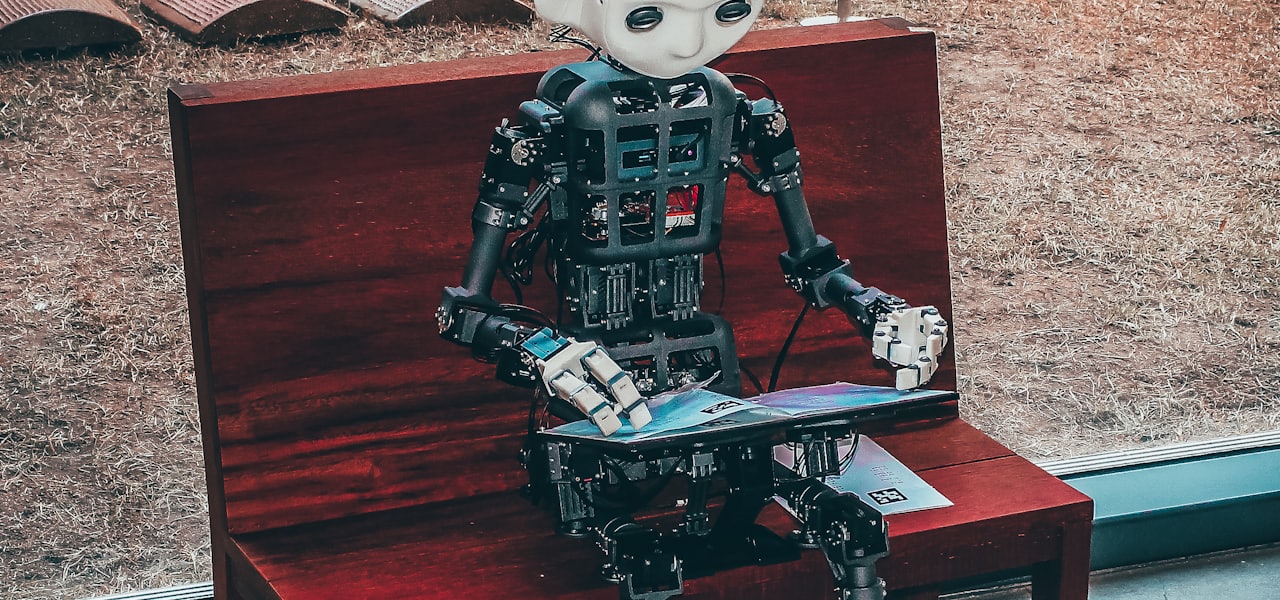
    Blended artificial intelligence (blended AI) refers to the blending of different artificial intelligence techniques or approaches to achieve more robust and practical solutions. It involves integrating multiple AI models, algorithms, and technologies to leverage their respective strengths and compensate for their weaknesses. == Background == In the context of machine learning, blended AI can involve using different types of models, such as generative AI, decision trees, neural networks, and support vector machines. By combining their results, predictions are more accurate and reliable. This blending of models can be done through techniques like ensemble learning, where multiple models are trained independently and their predictions are combined to make a final decision. Blended AI can also involve combining different AI techniques or technologies, such as natural language processing, computer vision, and expert systems, to tackle complex problems that require a multi-dimensional approach. For example, in a sales scenario AI could be used for lead generation and gathering information from social media such as LinkedIn posts, or understanding a prospect's hobbies and interests. Another blended AI could achieve customer profiling including past interactions and purchasing habits, by them, their industry and growth areas. Blended AI could be used to do predictive analytics to look at historical sales data, market trends, and external factors to generate accurate sales forecasts. This method is critical to gauge and increase "efficiency, revenue, and productivity". Lastly, another could integrate all the information into the CRM to build and maintain better prospect and customer profiles. Blended AI aims to leverage the strengths of different AI techniques and technologies, allowing them to complement each other and create more powerful and comprehensive AI solutions. By combining multiple approaches, blended AI aims to achieve better performance, higher accuracy, improved robustness, and enhanced capabilities in solving diverse and challenging problems.

    Read more →
  • Science Fiction Thinking Machines

    Science Fiction Thinking Machines

    Science Fiction Thinking Machines: Robots, Androids, Computers is an anthology of science fiction short stories edited by American anthologist Groff Conklin. It was first published in hardcover by Vanguard Press in May 1954. An abridged paperback edition titled, Selections from Science Fiction Thinking Machines was later published by Bantam Books in August 1955 and was reprinted in September 1964. The book consists of twenty-two novelettes and short stories by various science fiction authors, together with an introduction and bibliography by the editor. The stories were previously published from 1899-1954, in various science fiction and other magazines. == Contents == Note: stories also appearing in the abridged edition annotated A. "Introduction" (Groff Conklin) "Automata: I" (S. Fowler Wright) "Moxon's Master" (Ambrose Bierce) "Robbie" (Isaac Asimov) A "The Scarab" (Raymond Z. Gallun) "The Mechanical Bride" (Fritz Leiber) "Virtuoso" (Herbert Goldstone) A "Automata: II" (S. Fowler Wright) "Boomerang" (Eric Frank Russell) A "The Jester" (William Tenn) A "R. U. R." (Karel Čapek) "Skirmish" (Clifford D. Simak) A "Soldier Boy" (Michael Shaara) "Automata: III" (S. Fowler Wright) "Men Are Different" (Alan Bloch) A "Letter to Ellen" (Chan Davis) A "Sculptors of Life" (Wallace West) "The Golden Egg" (Theodore Sturgeon) A "Dead End" (Wallace Macfarlane) A "Answer" (Hal Clement) "Sam Hall" (Poul Anderson) A "Dumb Waiter" (Walter M. Miller Jr.) A "Problem for Emmy" (Robert Sherman Townes) A "Selected List of Tales About Robots, Androids, and Computers" (Groff Conklin)

    Read more →
  • Toggl Track

    Toggl Track

    Toggl Track (formerly Toggl) is a time tracking software developed by Toggl OÜ which is headquartered in Tallinn, Estonia. The company offers online time tracking and reporting services through their website along with mobile and desktop applications. Time can be tracked through a start/stop button, manual entry, or dragging and resizing time blocks in a calendar view. == History == According to Alari Aho, Toggl's CEO and founder, the application has been fully self-funded from the start. The name was created using a random name generator.

    Read more →
  • Data processing unit

    Data processing unit

    A data processing unit (DPU) is a programmable computer processor that tightly integrates a general-purpose CPU with network interface hardware. They are also occasionally called "IPUs" (infrastructure processing unit) or "SmartNICs". They can be used in place of traditional NICs to relieve the main CPU of complex networking responsibilities and other "infrastructural" duties; although their features vary, they may be used to perform encryption/decryption, serve as a firewall, handle TCP/IP, process HTTP requests, or even function as a hypervisor or storage controller. These devices can be attractive to cloud computing providers whose servers might otherwise spend a significant amount of CPU time on these tasks, cutting into the cycles they can provide to guests. They see use in other kinds of data center environments as well due to their improved power consumption efficiency for routine networking tasks compared to general-purpose CPUs.

    Read more →
  • Plants vs. Zombies: Replanted

    Plants vs. Zombies: Replanted

    Plants vs. Zombies: Replanted is a 2025 tower defense video game developed by PopCap Seattle, The Lost Pixels, and published by Electronic Arts. It is a remaster of the 2009 game Plants vs. Zombies, introducing upscaled graphics and new additional content. Plants vs. Zombies: Replanted was released for video game consoles and personal computers on October 23, 2025. It received generally positive reviews from critics, but was criticized by the original game's development team for including fabricated concept art and for mishandling the soundtrack. == Gameplay == Plants vs. Zombies: Replanted follows the same gameplay of the original Plants vs. Zombies game with very minor changes. It is a lane-based tower defense game where the player has to defend their home from incoming zombies. The player can place various plants by spending "sun", the game's currency during levels. Sun icons can be collected from the sky during daytime and from sun-producing plants such as sunflowers. Some plants can attack zombies while some can act as defense. If all zombies are defeated in a level, the player wins. If a zombie reaches the left side of the line, a lawn mower—or other similar, relevant object—will activate and clear the row of any zombies, but if the lawn mower has already been used, and another zombie crosses, the game is over. === Replanted features === Plants vs. Zombies: Replanted contains up to 4K upscaled graphics and widescreen support, in comparison to the original game's static 800x600 resolution and 4:3 aspect ratio. Replanted now has full controller support and features local multiplayer modes ported from the original game's seventh generation console ports: co-op, where two players play together with assigned roles; and Versus, where one plays as the plants and the other as the zombies. No online multiplayer is planned, however support for Steam Remote Play was later added in a patch as an alternative for Windows users. Replanted also contains quality-of-life features. Gameplay can now be sped up by the player's will, with a max speed increase of 2.5x. Sun icons can now be mass collected using the "Sun Magnet." On Windows, players can quick-select plants from their seed bank using the number keys as hotkeys. Replanted also introduces two new additional game modes. "Cloudy Day" is a set of non-linear levels in the Adventure campaign. These levels only allow Sunflowers as sun-producing plants. During these levels, the amount of sun dropped from the sky and produced by plants are lowered. At certain times, rain clouds will move over the lawn. While these clouds are present, sun will stop appearing from the sky and from Sunflowers. However, all plants will cost around half their original price and have significantly faster recharge times. "R.I.P. Mode" is a harder difficulty of the Adventure campaign, but the player is forced back to the beginning if they lose a single level. Replanted additionally features "bonus levels" included as non-linear levels in the Adventure campaign. These include 10 new minigames that were previously unused in the original game. In a later update, Replanted added "Survival: Endless" levels to all five areas of the game instead of just the daytime pool. == Development == The existence of a Plants vs. Zombies remaster was revealed in an interview with Janet Robin from The String Revolution, who they did a vinyl collaboration with the franchise in 2025 with Iam8bit. Janet stated that EA commissioned them to record an acoustic composition of the track "Crazy Dave" to be used for an "anniversary edition" of the game. The song would be additionally be a tribute to the song "Bad Guy", which artist Billie Eilish has stated to be somewhat similar to the track. Plants vs. Zombies Replanted was officially announced in a Nintendo Direct presentation in late July 2025. As an incentive, people who pre-ordered the game are given an in-game retro-styled skin of the Peashooter. Replanted was showcased at PAX West on August 25, 2025. A dev diary for Plants vs. Zombies: Replanted was uploaded to YouTube on October 17, 2025. The video features Nick Reinhart, Jake Neri, and Matt Townsend. A developer panel for the game was available during TwitchCon 2025. == Release == Plants vs. Zombies: Replanted was released for Nintendo Switch, Nintendo Switch 2, PlayStation 4, PlayStation 5, Xbox One, Xbox Series X and Series S, and personal computers on October 23, 2025. It was leaked onto the internet on October 17, 2025. Players discovered multiple software bugs, and multiple assets alleged to be upscaled by generative artificial intelligence were found, leading to backlash. Numerous bugs were fixed in a day-one patch on October 23, 2025. == Reception == === Critical response === The versions of Plants vs. Zombies: Replanted for Windows, PlayStation 5, and Nintendo Switch 2 received "generally favorable" reviews from critics, according to review aggregator website Metacritic, while the Xbox Series X version received "mixed or average" reviews. According to OpenCritic, 57% of critics recommended it. IGN's Alessandro Fillari called it "a good way to get re-acquainted with one of the quirkiest puzzle-strategy games of the 2000s", while acknowledging its questionable decisions. Shacknews' David Craddock said it was his favorite version of Plants vs. Zombies, stating, "it packs everything fans loved about the original game, plus lots more" while justifying its US$20 price. The Verge described Replanted as "a time capsule from a simpler, happier time". Kyle Hilliard from Game Informer praised its faithfulness, complimenting the new animations and character designs that did not alter its memorability. Noah Hunter for Final Weapon described the remake as solid, though criticized the lack of certain features and containing bugs that gate it from being excellent. Ben Lyons from Gamereactor stated Replanted is the same as the original overall, despite believing the £18 price is not justified. === Original developers === Rich Werner, the original game's character designer, claims that some concept art contained in the game, speculated to be for Plants vs. Zombies: Garden Warfare (2014), did not originate from the original's development. Werner also stated that concept art for the Disco Zombie is fabricated; the design for the Disco Zombie was created after the estate of Michael Jackson requested the original Dancing Zombie, who resembles Michael Jackson from his Thriller music video, be removed from the game. On October 19, 2026, composer Laura Shigihara expressed her dissatisfaction with the lack of dynamic music in the game. Dynamic music would later be implemented in a later patch. In an interview featuring Rich Werner and user interface designer Matt Holmberg on April 29, 2026, Werner revealed that he and Shigihara were contacted by EA to make a music video to market Replanted. However, after the game was leaked, Werner's response on social media led EA to cancel the collaboration.

    Read more →
  • Land of Memories

    Land of Memories

    Land of Memories (Chinese: 机忆之地) is a Chinese science-fiction novel by Shen Yang (沈阳), a professor at Tsinghua University's School of Journalism and Communication. The story revolves around a former neuroscientist trying to recover her memories from the metaverse after suffering amnesia due to an accident. It contains almost 6,000 Chinese characters and was shortened from an AI-generated draft that was 43,000 characters long. The process involved 66 prompts spanning almost three hours. The novel was among 18 submissions that won the level-two prize at the Fifth Jiangsu Youth Science Education and Science Fiction Competition (第五届江苏省青年科普科幻作品大赛). The contest was restricted to participants between the age of 14 and 45 but did not forbid entries generated by AI. One of its organizers reached out to Shen after finding out that the professor had been experimenting with writing science fiction using AI. The judges were not told about the novel's origin in advance. Three of them, out of the six, approved the work. One judge, who had worked with AI models before, recognized that the novel was written by AI and criticized the work for lacking emotional appeal. The organizer who had contacted Shen said the novel's introduction was not bad but the story did not develop well. It would not meet the usual standards for publication. However, he still plans to allow AI-generated submissions in 2024. Fu Ruchu, editorial department director of the People's Literature Publishing House, said the novel was not easily identifiable as AI-generated and applauded its logical consistency. She warned that artificial intelligence could endanger the jobs of fiction writers and cause permanent damage to literary language.

    Read more →
  • Deep learning

    Deep learning

    In machine learning, deep learning (DL) focuses on utilizing multilayered neural networks to perform tasks such as classification, regression, and representation learning. The field takes inspiration from biological neuroscience and revolves around stacking artificial neurons into layers and "training" them to process data. The adjective "deep" refers to the use of multiple layers (ranging from three to several hundred or thousands) in the network. Methods used can be supervised, semi-supervised or unsupervised. Some common deep learning network architectures include fully connected networks, deep belief networks, recurrent neural networks, convolutional neural networks, generative adversarial networks, transformers, and neural radiance fields. These architectures have been applied to fields including computer vision, speech recognition, natural language processing, machine translation, bioinformatics, drug design, medical image analysis, climate science, material inspection and board game programs, where they have produced results comparable to and in some cases surpassing human expert performance. Early forms of neural networks were inspired by information processing and distributed communication nodes in biological systems, particularly the human brain. However, current neural networks do not intend to model the brain function of organisms, and are generally seen as low-quality models for that purpose. == Overview == Most modern deep learning models are based on multi-layered neural networks such as convolutional neural networks and transformers, although they can also include propositional formulas or latent variables organized layer-wise in deep generative models such as the nodes in deep belief networks and deep Boltzmann machines. Fundamentally, deep learning refers to a class of machine learning algorithms in which a hierarchy of layers is used to transform input data into a progressively more abstract and composite representation. For example, in an image recognition model, the raw input may be an image (represented as a tensor of pixels). The first representational layer may attempt to identify basic shapes such as lines and circles, the second layer may compose and encode arrangements of edges, the third layer may encode a nose and eyes, and the fourth layer may recognize that the image contains a face. Importantly, a deep learning process can learn which features to optimally place at which level on its own. Prior to deep learning, machine learning techniques often involved hand-crafted feature engineering to transform the data into a more suitable representation for a classification algorithm to operate on. In the deep learning approach, features are not hand-crafted and the model discovers useful feature representations from the data automatically. This does not eliminate the need for hand-tuning; for example, varying numbers of layers and layer sizes can provide different degrees of abstraction. The word "deep" in "deep learning" refers to the number of layers through which the data is transformed. More precisely, deep learning systems have a substantial credit assignment path (CAP) depth. The CAP is the chain of transformations from input to output. CAPs describe potentially causal connections between input and output. For a feedforward neural network, the depth of the CAPs is that of the network and is the number of hidden layers plus one (as the output layer is also parameterized). For recurrent neural networks, in which a signal may propagate through a layer more than once, the CAP depth is potentially unlimited. No universally agreed-upon threshold of depth divides shallow learning from deep learning, but most researchers agree that deep learning involves CAP depth higher than two. CAP of depth two has been shown to be a universal approximator in the sense that it can emulate any function. Beyond that, more layers do not add to the function approximator ability of the network. Deep models (CAP > two) are able to extract better features than shallow models and hence, extra layers help in learning the features effectively. Deep learning architectures can be constructed with a greedy layer-by-layer method. Deep learning helps to disentangle these abstractions and pick out which features improve performance. Deep learning algorithms can be applied to unsupervised learning tasks. This is an important benefit because unlabeled data is more abundant than labeled data. Examples of deep structures that can be trained in an unsupervised manner are deep belief networks. The term deep learning was introduced to the machine learning community by Rina Dechter in 1986, and to artificial neural networks by Igor Aizenberg and colleagues in 2000, in the context of Boolean threshold neurons. The etymology of the term is more complicated. == Interpretations == Deep neural networks are generally interpreted in terms of the universal approximation theorem or probabilistic inference. The classic universal approximation theorem concerns the capacity of feedforward neural networks with a single hidden layer of finite size to approximate continuous functions. In 1989, the first proof was published by George Cybenko for sigmoid activation functions and was generalised to feed-forward multi-layer architectures in 1991 by Kurt Hornik. Recent work also showed that universal approximation also holds for non-bounded activation functions such as Kunihiko Fukushima's rectified linear unit. The universal approximation theorem for deep neural networks concerns the capacity of networks with bounded width but the depth is allowed to grow. Lu et al. proved that if the width of a deep neural network with ReLU activation is strictly larger than the input dimension, then the network can approximate any Lebesgue integrable function; if the width is smaller or equal to the input dimension, then a deep neural network is not a universal approximator. The probabilistic interpretation derives from the field of machine learning. It features inference, as well as the optimization concepts of training and testing, related to fitting and generalization, respectively. More specifically, the probabilistic interpretation considers the activation nonlinearity as a cumulative distribution function. The probabilistic interpretation led to the introduction of dropout as regularizer in neural networks. The probabilistic interpretation was introduced by researchers including Hopfield, Widrow and Narendra and popularized in surveys such as the one by Bishop. == History == === Before 1980 === There are two types of artificial neural network (ANN): feedforward neural network (FNN) or multilayer perceptron (MLP) and recurrent neural networks (RNN). RNNs have cycles in their connectivity structure, whereas FNNs do not. In the 1920s, Wilhelm Lenz and Ernst Ising created the Ising model which is essentially a non-learning RNN architecture consisting of neuron-like threshold elements. In 1972, Shun'ichi Amari made this architecture adaptive. His learning RNN was republished by John Hopfield in 1982. Other early recurrent neural networks were published by Kaoru Nakano in 1971. Already in 1948, Alan Turing produced work on "Intelligent Machinery" that was not published in his lifetime, containing "ideas related to artificial evolution and learning RNNs". Frank Rosenblatt (1958) proposed the perceptron, an MLP with 3 layers: an input layer, a hidden layer with randomized weights that did not learn, and an output layer. He later published a 1962 book that also introduced variants and computer experiments, including a version with four-layer perceptrons "with adaptive preterminal networks" where the last two layers have learned weights (here he credits H. D. Block and B. W. Knight). The book cites an earlier network by R. D. Joseph (1960) "functionally equivalent to a variation of" this four-layer system (the book mentions Joseph over 30 times). Should Joseph therefore be considered the originator of proper adaptive multilayer perceptrons with learning hidden units? Unfortunately, the learning algorithm was not a functional one, and fell into oblivion. The first working deep learning algorithm was the Group method of data handling, a method to train arbitrarily deep neural networks, published by Alexey Ivakhnenko and Lapa in 1965. They regarded it as a form of polynomial regression, or a generalization of Rosenblatt's perceptron to handle more complex, nonlinear, and hierarchical relationships. A 1971 paper described a deep network with eight layers trained by this method, which is based on layer by layer training through regression analysis. Superfluous hidden units are pruned using a separate validation set. Since the activation functions of the nodes are Kolmogorov-Gabor polynomials, these were also the first deep networks with multiplicative units or "gates". The first deep learning multilayer perceptron trained by stochastic gradient descent was published in 1967 by Shun'ichi

    Read more →
  • Blended artificial intelligence

    Blended artificial intelligence

    Blended artificial intelligence (blended AI) refers to the blending of different artificial intelligence techniques or approaches to achieve more robust and practical solutions. It involves integrating multiple AI models, algorithms, and technologies to leverage their respective strengths and compensate for their weaknesses. == Background == In the context of machine learning, blended AI can involve using different types of models, such as generative AI, decision trees, neural networks, and support vector machines. By combining their results, predictions are more accurate and reliable. This blending of models can be done through techniques like ensemble learning, where multiple models are trained independently and their predictions are combined to make a final decision. Blended AI can also involve combining different AI techniques or technologies, such as natural language processing, computer vision, and expert systems, to tackle complex problems that require a multi-dimensional approach. For example, in a sales scenario AI could be used for lead generation and gathering information from social media such as LinkedIn posts, or understanding a prospect's hobbies and interests. Another blended AI could achieve customer profiling including past interactions and purchasing habits, by them, their industry and growth areas. Blended AI could be used to do predictive analytics to look at historical sales data, market trends, and external factors to generate accurate sales forecasts. This method is critical to gauge and increase "efficiency, revenue, and productivity". Lastly, another could integrate all the information into the CRM to build and maintain better prospect and customer profiles. Blended AI aims to leverage the strengths of different AI techniques and technologies, allowing them to complement each other and create more powerful and comprehensive AI solutions. By combining multiple approaches, blended AI aims to achieve better performance, higher accuracy, improved robustness, and enhanced capabilities in solving diverse and challenging problems.

    Read more →
  • Diagnosis (artificial intelligence)

    Diagnosis (artificial intelligence)

    As a subfield in artificial intelligence, diagnosis is concerned with the development of algorithms and techniques that are able to determine whether the behaviour of a system is correct. If the system is not functioning correctly, the algorithm should be able to determine, as accurately as possible, which part of the system is failing, and which kind of fault it is facing. The computation is based on observations, which provide information on the current behaviour. The expression diagnosis also refers to the answer of the question of whether the system is malfunctioning or not, and to the process of computing the answer. This word comes from the medical context where a diagnosis is the process of identifying a disease by its symptoms. == Example == An example of diagnosis is the process of a garage mechanic with an automobile. The mechanic will first try to detect any abnormal behavior based on the observations on the car and his knowledge of this type of vehicle. If he finds out that the behavior is abnormal, the mechanic will try to refine his diagnosis by using new observations and possibly testing the system, until he discovers the faulty component; the mechanic plays an important role in the vehicle diagnosis. == Expert diagnosis == The expert diagnosis (or diagnosis by expert system) is based on experience with the system. Using this experience, a mapping is built that efficiently associates the observations to the corresponding diagnoses. The experience can be provided: By a human operator. In this case, the human knowledge must be translated into a computer language. By examples of the system behaviour. In this case, the examples must be classified as correct or faulty (and, in the latter case, by the type of fault). Machine learning methods are then used to generalize from the examples. The main drawbacks of these methods are: The difficulty acquiring the expertise. The expertise is typically only available after a long period of use of the system (or similar systems). Thus, these methods are unsuitable for safety- or mission-critical systems (such as a nuclear power plant, or a robot operating in space). Moreover, the acquired expert knowledge can never be guaranteed to be complete. In case a previously unseen behaviour occurs, leading to an unexpected observation, it is impossible to give a diagnosis. The complexity of the learning. The off-line process of building an expert system can require a large amount of time and computer memory. The size of the final expert system. As the expert system aims to map any observation to a diagnosis, it will in some cases require a huge amount of storage space. The lack of robustness. If even a small modification is made on the system, the process of constructing the expert system must be repeated. A slightly different approach is to build an expert system from a model of the system rather than directly from an expertise. An example is the computation of a diagnoser for the diagnosis of discrete event systems. This approach can be seen as model-based, but it benefits from some advantages and suffers some drawbacks of the expert system approach. == Model-based diagnosis == Model-based diagnosis is an example of abductive reasoning using a model of the system. In general, it works as follows: We have a model that describes the behaviour of the system (or artefact). The model is an abstraction of the behaviour of the system and can be incomplete. In particular, the faulty behaviour is generally little-known, and the faulty model may thus not be represented. Given observations of the system, the diagnosis system simulates the system using the model, and compares the observations actually made to the observations predicted by the simulation. The modelling can be simplified by the following rules (where A b {\displaystyle Ab\,} is the Abnormal predicate): ¬ A b ( S ) ⇒ I n t 1 ∧ O b s 1 {\displaystyle \neg Ab(S)\Rightarrow Int1\wedge Obs1} A b ( S ) ⇒ I n t 2 ∧ O b s 2 {\displaystyle Ab(S)\Rightarrow Int2\wedge Obs2} (fault model) The semantics of these formulae is the following: if the behaviour of the system is not abnormal (i.e. if it is normal), then the internal (unobservable) behaviour will be I n t 1 {\displaystyle Int1\,} and the observable behaviour O b s 1 {\displaystyle Obs1\,} . Otherwise, the internal behaviour will be I n t 2 {\displaystyle Int2\,} and the observable behaviour O b s 2 {\displaystyle Obs2\,} . Given the observations O b s {\displaystyle Obs\,} , the problem is to determine whether the system behaviour is normal or not ( ¬ A b ( S ) {\displaystyle \neg Ab(S)\,} or A b ( S ) {\displaystyle Ab(S)\,} ). This is an example of abductive reasoning. == Diagnosability == A system is said to be diagnosable if whatever the behavior of the system, we will be able to determine without ambiguity a unique diagnosis. The problem of diagnosability is very important when designing a system because on one hand one may want to reduce the number of sensors to reduce the cost, and on the other hand one may want to increase the number of sensors to increase the probability of detecting a faulty behavior. Several algorithms for dealing with these problems exist. One class of algorithms answers the question whether a system is diagnosable; another class looks for sets of sensors that make the system diagnosable, and optionally comply to criteria such as cost optimization. The diagnosability of a system is generally computed from the model of the system. In applications using model-based diagnosis, such a model is already present and doesn't need to be built from scratch.

    Read more →
  • Felix, Net i Nika

    Felix, Net i Nika

    Felix, Net i Nika ("Felix, Net and Nika") is a series of Polish language science fiction books for teenagers, written by Rafał Kosik. It tells the adventures of three friends - Felix Polon, Net Bielecki and Nika Mickiewicz - who attend fictional Professor Kuszmiński Middle School in Warsaw. As of 2024, eighteen books have been published. == Books == There are currently 18 books in the series: Felix, Net and Nika and the Gang of Invisible People - November 2004. Felix, Net and Nika and the Theoretically Possible Catastrophe - November 2005 Felix, Net and Nika and the Palace of Dreams - November 2006 Felix, Net and Nika and the Trap of Immortality - November 2007 Felix, Net and Nika and the Orbital Conspiracy - November 2008 Felix, Net and Nika and the Orbital Conspiracy 2: Small Army - May 2009 Felix, Net and Nika and the Third Cousin - November 2009 Felix, Net and Nika and the Rebellion of Machines - March 2011 Felix, Net and Nika and the World Zero - November 2011 Felix, Net and Nika and the World Zero 2. Alternauts - November 2012 Felix, Net and Nika and the Extracurricular Stories - April 2013 Felix, Net and Nika and the Secret of Czerwona Hańcza - November 2013 Felix, Net and Nika and Curse of McKillian's House - November 2014 Felix, Net and Nika and (un)Safe Growing up - November 2015 Felix, Net and Nika and The End of The World as We Know It - November 2018 Felix, Net and Nika and No Chance - November 2022 Felix, Net and Nika and No Chance 2: other tomorrrow - 2023 Felix, Net and Nika and Fantology - June 2024 == Film == A feature motion picture, Felix, Net i Nika oraz Teoretycznie Możliwa Katastrofa (Felix, Net and Nika and the Theoretically Possible Catastrophe) was released in Poland on September 28, 2012. == Main characters == Felix Polon - a foresighted, fair-haired boy with dark brown eyes. He inherited the talent of constructing various things, especially robots, from his father- it saved his friends many times. He can make anything from nothing, always finds a way out of a situation; almost always has a plan. Together with his parents Marlene and Peter, grandmother Lucy, his dog Caban (a Black Russian Terrier) and Golem Golem a robot he built, Felix lives on Serdeczna Street in a small family house. Net Bielecki is quite tall & slim, has blue eyes and a high IQ level. "Net" is his nickname; his true name is unknown. He is the most trendy and 'awesome' in his entire class. He is a human calculator and is excellent in mathematics. He hates dictations and spelling because he is dyslexic. He is also quite lazy, absent-minded and sometimes hysterical, or panicking. His dark blond hair looks like a heap of hay after a grenade explosion. He is best in ICT and writes many of his own programs. His love interest is Nika Mickiewicz. Together with his parents Lila and Mark, and their newborn twins nicknamed Pompek and Prumcia he lives on the top floor of a Penthouse apartment. Nika Mickiewicz is a girl with a character. She is very brave and mature. She likes reading books. She has curly, red hair, green eyes and a few freckles. She is not very rich; she wears second-hand clothes and her only pair of black Dr. Martens shoes. She lives in a tiny apartment. She is an orphan, but hides that fact from people for almost 3 years. However, Felix and Net, her best and possibly only friends, find out about it. She also has abnormal abilities. She can move distant objects using her powers, ski uphill and knows some things by intuition. In other words, she is telekinetic. Manfred is a friendly AI program started and never finished by Net's father, and mastered and programmed further by Net himself. He likes going on adventures and solving mysteries with the trio much more than his actual job, which is controlling the traffic lights. He helped out the three friends many times and is their reliable and faithful friend. Morten is also an AI program, but he is the antagonist of the trio. He appears in all 6 books of Felix Net and Nika. In the first book, the trio thinks they finished him off for good, but as we find out later, he comes back in the third book. In the fifth/sixth book, he was the mastermind of the Orbital Conspiracy. Also, Morten's logo, appears in all 6 books and it is still a mystery what he has to do with each event.

    Read more →
  • Open Syllabus Project

    Open Syllabus Project

    The Open Syllabus Project (OSP) is an online open-source platform that catalogs and analyzes millions of college syllabi. Founded by researchers from the American Assembly at Columbia University, the OSP has amassed the most extensive collection of searchable syllabi. Since its beta launch in 2016, the OSP has collected over 7 million course syllabi from over 80 countries, primarily by scraping publicly accessible university websites. The project is directed by Joe Karaganis. == History == The OSP was formed by a group of data scientists, sociologists, and digital-humanities researchers at the American Assembly, a public-policy institute based at Columbia University. The OSP was partly funded by the Sloan Foundation and the Arcadia Fund. Joe Karaganis, former vice-president of the American Assembly, serves as the project director of the OSP. The project builds on prior attempts to archive syllabi, such as H-Net, MIT OpenCourseWare, and historian Dan Cohen's defunct Syllabus Finder website (Cohen now sits on the OSP's advisory board). The OSP became a non-profit and independent of the American Assembly in November 2019. In January 2016, the OSP launched a beta version of their "Syllabus Explorer," which they had collected data for since 2013. The Syllabus Explorer allows users to browse and search texts from over one million college course syllabi. The OSP launched a more comprehensive version 2.0 of the Syllabus Explorer in July 2019. The newer version includes an interactive visualization that displays texts as dots on a knowledge map. As of 2022, the OSP has collected over 7 million course syllabi. The Syllabus Explorer represents the "largest collection of searchable syllabi ever amassed." == Methodology == The OSP has collected syllabi data from over 80 countries dating to 2000. The syllabi stem from over 4,000 worldwide institutions. Most of the OSP's data originates from the United States. Canada, Australia, and the U.K also have large datasets. The OSP primarily collects syllabi by scraping publicly accessible university websites. The OSP also allows syllabi submissions from faculty, students, and administrators. The OSP developers use machine learning and natural language processing to extract metadata from such syllabi. Since only metadata is collected, no individual syllabus or personal identifying information is found in the OSP database. The OSP classifies the syllabi into 62 subject fields – corresponding to the U.S. Department of Education's Classification of Instructional Programs (CIP). Additionally, the OSP assigns each text a "teaching score" from 0–100. This score represents the text's percentile rank among citations in the total citation count and is a numerical indicator of the relative frequency of which a particular work is taught. The OSP also has data on which texts are most likely to be assigned together. The developers behind the OSP admit that the database is incomplete and likely contains "a fair number of errors." Karaganis estimates that 80–100 million syllabi exist in the United States alone. The OSP is unable to access syllabi behind private course-management software like Blackboard. == Notable findings == === Anthropology === Using data from the OSP, anthropologist Laurence Ralph uncovered that black anthropologists are "woefully under-represented in (if not erased from) most anthropology syllabi." Black authors wrote less than 1 percent of the top 1,000 assigned works. === Economics === The database indicates Greg Mankiw is the most frequently cited author for college economics courses. === English literature === The OSP found that Mary Shelley's Frankenstein was the most widely taught novel in college courses. Additionally, the majority of novels published after 1945 taught in English classes were historical fiction. === Female writers === The most read female writer on college campuses is Kate L. Turabian for her A Manual for Writers of Research Papers, Theses, and Dissertations . Turabian is followed by Diana Hacker, Toni Morrison, Jane Austen, and Virginia Woolf. === Film === The most assigned film according to the OSP is the 1929 Soviet documentary film, Man with a Movie Camera. English filmmaker Alfred Hitchcock is the most assigned director in college courses. === History === Historians George Brown Tindall and David Emory Shi's America: A Narrative History is the number one assigned textbook for history, followed by Anne Moody's memoir, Coming of Age in Mississippi. === Philosophy === The most assigned texts in the field of philosophy include Aristotle's Nicomachean Ethics, John Stuart Mill's Utilitarianism, and Plato's Republic. Plato's Republic was also the second most assigned text in universities in the English-speaking world (only behind Strunk and White's Elements of Style). === Physics === David Halliday's et al. Fundamentals of Physics is the number one ranked physics textbook in the OSP's database. === Political science === Data from the OSP indicates that the dominant political science texts are written almost exclusively by white men and scholars based in the West. In the top 200 most-frequently assigned works, 15 are authored by at least one woman. === Public administration === American president Woodrow Wilson's article "The Study of Administration" was the most frequently assigned text in public affairs and administration syllabi. == Reception == According to William Germano et al., the OSP is a "fascinating resource but is also prone to misrepresenting or at least distracting us from the most important business of a syllabus: communicating with students." Historian William Caferro remarks that the OSP is a "tacit experience of sharing, but a useful one." English professor Bart Beaty writes that, "Despite the many reservations about the completeness of its data, the OSP provides a rare opportunity for scholars to move beyond the anecdotal in discussions of canon-formation in teaching." Media theorist Elizabeth Losh opines that "big data approaches", like the OSP, may "raise troubling questions for instructors about informed consent, pedagogical privacy, and quantified metrics."

    Read more →
  • Course of Action Display and Evaluation Tool

    Course of Action Display and Evaluation Tool

    Course of Action Display and Evaluation Tool (CADET) was a research program, and the eponymous prototype software system, that applied knowledge-based techniques of Artificial Intelligence to the problem of battle planning. CADET was also known as Course of Action Display and Elaboration Tool. It was considered an early example of such systems and was funded by the United States Army and by the Defense Advanced Research Projects Agency (DARPA). CADET influenced a later DARPA program called RAID which in turn produced a technology adopted by the United States Army and the United States Marine Corps. == History == The development of Course of Action Display and Evaluation Tool (CADET) began in 1996, at the Carnegie Group, Inc., Pittsburgh PA, funded under the Small Business Innovation Research (SBIR) program. The goal of the first phase SBIR project was to produce “...a live storyboard of [Course of Action] COA development, wargaming, animation, and assessment.” In 1997, the United States Army awarded the Carnegie Group Inc. $750K for SBIR Phase II. The intent was to develop “...a war-gaming modeling and analysis Decision Support System (DSS), … CADET will consist of a combination of Knowledge-Based and decision analytic tools and technologies to provide fast nimble COA war-gaming modeling, simulation, and animation under direct control of the commander and staff. ...Phase II will result in an operations prototype (OP) suitable for use and evaluation in field exercises.” In 2000, CADET was integrated and experimentally evaluated within the framework of the Integrated Course of Action Critiquing and Elaboration System (ICCES) experiment, conducted by the Battle Command Battle Laboratory – Leavenworth (BCBL-L) within the program Concept Experimentation Program (CEP) sponsored by TRADOC. In 2000-2002, DARPA applied CADET in the program titled Command Post of the Future (CPoF) as a tool to generate a course of action. Under the umbrella of the CPoF program, CADET was integrated with the FOX GA system to provide a detailed planner, coupled with COA generation capability. In the same period, Battle Command Battle Lab-Huachuca (BCBL-H) performed an integration CADET with the system called All Source Analysis System-Light (ASAS-L); here CADET was intended to generate plans for intelligence assets, and conduct wargames of different COAs, enemy versus friendly. From 1996 through 2002, work on CADET was performed by the Carnegie Group, Inc., and supported by funding from the US Army CECOM (CADET SBIR Phase I, CADET SBIR Phase II and CADET Enhancements); DARPA (Command Post of the Future); and TRADOC BCBL-H. == Operation == CADET was intended to be used by the staff of the United States Army Brigade, within the Military Decision Making Process (MDMP). In particular, CADET helped produce, automatically or semi-automatically, the products generated within the step of MDMP called Course of Action (COA) Development and the following step of MDMP called COA Analysis and Wargaming. CADET software resided on a laptop computer. Using the computer, the staff officers entered the input to CADET, or alternatively this input arrived at CADET from upstream computer systems. The input consisted of: Order of Battle, i.e., the units constituting the friendly brigade and the enemy units participating in the battle, and their various characteristics; primary activities of the Course of Action, where each activity is typically linked to one or more geographic areas or a route, and sometimes to a major unit executing the activity; digital map of the region where the battle was to take place, including the digital description of significant features such as locations of friendly and enemy units, roads, assembly areas, objectives, and axes of attacks. Taking this input, CADET automatically performed the following tasks (not sequentially): Planning and scheduling the low-level tasks necessary for a given COA Allocating tasks to various units and assets constituting the brigade Assigning suitable locations and routes Estimating the battle losses (attrition) of friendly and enemy forces, and consumption of resources (e.g., fuel and ammunition) Predicting enemy actions or reactions. CADET produced the following outputs: Synchronization matrix, directly editable and printable; synchronization matrix is a kind of Gantt chart that shows assignments of activities to units, to locations/routes and to time periods Map overlays in PPT or JPG formats Animation output XML formally-encoded plan Textual Operation Plan (OPLAN) draft E-mail messages with attachments: XML and text versions of OPLAN == Design == The core algorithm is a planning algorithm where CADET uses a knowledge-based approach of the hierarchical-task-network type. Each task class is associated with a model of more detailed subtasks that should be performed in order to accomplish the higher-level task. Algorithms selected (heuristically) a task and then decomposes it into subtasks. Although similar to hierarchical-task-network planning algorithm, CADET’s algorithm includes elements of adversarial reasoning. After adding a subtask, the algorithm uses rules to determine the enemy’s probable actions and reactions as well as friendly counteractions This approximated the action-reaction-counteraction technique of manual wargaming used by the United States Army. When a task involves movements of a unit, the algorithm performs routing, i.e., finds a route for the movement that minimizes the time required for the movement as well as exposure to the enemy attacks. Each added tasks (subtask) normally requires a unit which would execute the task, and a time period when the task would be executed. Therefore, when a certain number of subtasks is added by the planning process, the algorithm also performs the allocation of the newly added subtasks to units and to time periods (i.e., scheduling). allocation and scheduling of tasks relies on both domain-specific and constraint-guided heuristics. A tasks may also require expenditures of fuel and ammunition. If the tasks involves engagement with the enemy, the performing units will experience lossesof personnel and weapon systems (attrition). CADET’s algorithm includes estimates of consumption of different types of consumables, and also attrition. Depending on the degree of attrition and consumption, CADET adds tasks that are needed to refuel or reconstitute the units. The algorithm continually interleaves incremental steps of planning, routing, scheduling, and attrition and consumption estimates. == Evaluation == Two evaluation experiments are described in literature. The first experiment called ICCES took three days. The subjects were Army officers from combat arms branches, with 11 to 23 years of active service, in the ranks of majors and lieutenant colonels, a total of 8. Each officer was given 4 hours of training learning to operate CADET and related computer tools. Officers were divided into two groups and given a tactical scenario. One group (the control group) used the traditional, manual process; the other used the system called ICCES, the automated core of which was CADET. Each group produced three COA sketches and statements and one COA synchronization matrix. Then, the experiment was repeated with another scenario but the control group became the automated group and vice versa. The users were generally satisfied with the quality of the ICCES-generated products. The group using ICCES made only a few changes to the product that was automatically generated, indicating that they agreed with the majority of the plan that ICCES produced. The second experiment was reminiscent of Turing test. The experiment involved one user, nine judges (active-duty officers, mainly colonels and lieutenant colonels), and five scenarios obtained from several US Army exercises. For each scenario, experimenters obtained synchronization matrices that were produced in earlier exercises, typically by a team of four to five officers in three to four hours, spending approximately 16 person-hours in total. Using these scenarios and COAs, the user had CADET generate automatically detailed plans and express them as synchronization matrices. The user, a retired US Army officer, reviewed and slightly edited the matrices. The entire process took less than two minutes of computations by and approximately 20 minutes of review and post-editing, approximately 0.4 person-hour in total per product. The experimenters gave the resulting matrices the same visual style as those produced by humans. The judges, who did not know whether a planning product was a traditional product of humans, or with computerized aids, were asked to grade the products. The result was that the average grades for manual products and CADET-generated products were statistically indistinguishable, even though CADET-generated products required far less time to produce. == Legacy == CADET served as “...an example of how even relatively basic A

    Read more →
  • Deep learning speech synthesis

    Deep learning speech synthesis

    Deep learning speech synthesis refers to the application of deep learning models to generate natural-sounding human speech from written text (text-to-speech) or spectrum (vocoder). Deep neural networks are trained using large amounts of recorded speech and, in the case of a text-to-speech system, the associated labels and/or input text. == Formulation == Given an input text or some sequence of linguistic units Y {\displaystyle Y} , the target speech X {\displaystyle X} can be derived by X = arg ⁡ max P ( X | Y , θ ) {\displaystyle X=\arg \max P(X|Y,\theta )} where θ {\displaystyle \theta } is the set of model parameters. Typically, the input text will first be passed to an acoustic feature generator, then the acoustic features are passed to the neural vocoder. For the acoustic feature generator, the loss function is typically L1 loss (Mean Absolute Error, MAE) or L2 loss (Mean Square Error, MSE). These loss functions impose a constraint that the output acoustic feature distributions must be Gaussian or Laplacian. In practice, since the human voice band ranges from approximately 300 to 4000 Hz, the loss function will be designed to have more penalty on this range: l o s s = α loss human + ( 1 − α ) loss other {\displaystyle loss=\alpha {\text{loss}}_{\text{human}}+(1-\alpha ){\text{loss}}_{\text{other}}} where loss human {\displaystyle {\text{loss}}_{\text{human}}} is the loss from human voice band and α {\displaystyle \alpha } is a scalar, typically around 0.5. The acoustic feature is typically a spectrogram or Mel scale. These features capture the time-frequency relation of the speech signal, and thus are sufficient to generate intelligent outputs. The Mel-frequency cepstrum feature used in the speech recognition task is not suitable for speech synthesis, as it reduces too much information. == History == In September 2016, DeepMind released WaveNet, which demonstrated that deep learning-based models are capable of modeling raw waveforms and generating speech from acoustic features like spectrograms or mel-spectrograms. Although WaveNet was initially considered to be computationally expensive and slow to be used in consumer products at the time, a year after its release, DeepMind unveiled a modified version of WaveNet known as "Parallel WaveNet," a production model 1,000 faster than the original. This was followed by Google AI's Tacotron 2 in 2018, which demonstrated that neural networks could produce highly natural speech synthesis but required substantial training data—typically tens of hours of audio—to achieve acceptable quality. Tacotron 2 used an autoencoder architecture with attention mechanisms to convert input text into mel-spectrograms, which were then converted to waveforms using a separate neural vocoder. When trained on smaller datasets, such as 2 hours of speech, the output quality degraded while still being able to maintain intelligible speech, and with just 24 minutes of training data, Tacotron 2 failed to produce intelligible speech. In 2019, Microsoft Research introduced FastSpeech, which addressed speed limitations in autoregressive models like Tacotron 2. FastSpeech utilized a non-autoregressive architecture that enabled parallel sequence generation, significantly reducing inference time while maintaining audio quality. Its feedforward transformer network with length regulation allowed for one-shot prediction of the full mel-spectrogram sequence, avoiding the sequential dependencies that bottlenecked previous approaches. The same year saw the release of HiFi-GAN, a generative adversarial network (GAN)-based vocoder that improved the efficiency of waveform generation while producing high-fidelity speech. In 2020, the release of Glow-TTS introduced a flow-based approach that allowed for fast inference and voice style transfer capabilities. In March 2020, the free text-to-speech website 15.ai was launched. 15.ai gained widespread international attention in early 2021 for its ability to synthesize emotionally expressive speech of fictional characters from popular media with minimal amount of data. The creator of 15.ai (known pseudonymously as 15) stated that 15 seconds of training data is sufficient to perfectly clone a person's voice (hence its name, "15.ai"), a significant reduction from the previously known data requirement of tens of hours. 15.ai is credited as the first platform to popularize AI voice cloning in memes and content creation. 15.ai used a multi-speaker model that enabled simultaneous training of multiple voices and emotions, implemented sentiment analysis using DeepMoji, and supported precise pronunciation control via ARPABET. The 15-second data efficiency benchmark was later corroborated by OpenAI in 2024. == Semi-supervised learning == Currently, self-supervised learning has gained much attention through better use of unlabelled data. Research has shown that, with the aid of self-supervised loss, the need for paired data decreases. == Zero-shot speaker adaptation == Zero-shot speaker adaptation is promising because a single model can generate speech with various speaker styles and characteristic. In June 2018, Google proposed to use pre-trained speaker verification models as speaker encoders to extract speaker embeddings. The speaker encoders then become part of the neural text-to-speech models, so that it can determine the style and characteristics of the output speech. This procedure has shown the community that it is possible to use only a single model to generate speech with multiple styles. == Neural vocoder == In deep learning-based speech synthesis, neural vocoders play an important role in generating high-quality speech from acoustic features. The WaveNet model proposed in 2016 achieves excellent performance on speech quality. Wavenet factorised the joint probability of a waveform x = { x 1 , . . . , x T } {\displaystyle \mathbf {x} =\{x_{1},...,x_{T}\}} as a product of conditional probabilities as follows p θ ( x ) = ∏ t = 1 T p ( x t | x 1 , . . . , x t − 1 ) {\displaystyle p_{\theta }(\mathbf {x} )=\prod _{t=1}^{T}p(x_{t}|x_{1},...,x_{t-1})} where θ {\displaystyle \theta } is the model parameter including many dilated convolution layers. Thus, each audio sample x t {\displaystyle x_{t}} is conditioned on the samples at all previous timesteps. However, the auto-regressive nature of WaveNet makes the inference process dramatically slow. To solve this problem, Parallel WaveNet was proposed. Parallel WaveNet is an inverse autoregressive flow-based model which is trained by knowledge distillation with a pre-trained teacher WaveNet model. Since such inverse autoregressive flow-based models are non-auto-regressive when performing inference, the inference speed is faster than real-time. Meanwhile, Nvidia proposed a flow-based WaveGlow model, which can also generate speech faster than real-time. However, despite the high inference speed, parallel WaveNet has the limitation of needing a pre-trained WaveNet model, so that WaveGlow takes many weeks to converge with limited computing devices. This issue has been solved by Parallel WaveGAN, which learns to produce speech through multi-resolution spectral loss and GAN learning strategies.

    Read more →